Welcome to
Visakha Sri Sarada Peetham
A 300-year-old Guru Parampara and the only Advaita Vedanta Peetham in Andhra Pradesh and Telangana.
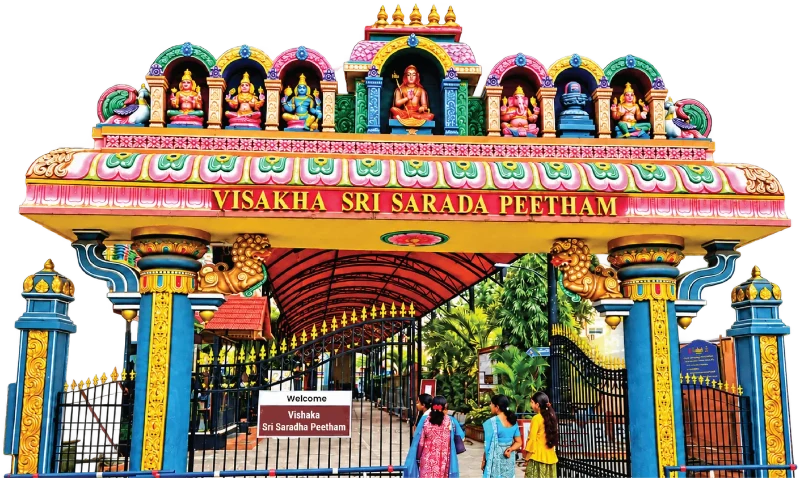
The Peetham
Visakha Sri Sarada Peetham, Visakhapatnam
Visakha Sri Sarada Peetham, located in Visakhapatnam, Andhra Pradesh, is dedicated to Parishuddha Shankara Advaita Vedanta, Sri Raja Shyamala Devi Upasana and the preservation of Sanatana Dharma. Its philosophical foundation emphasises realisation of the true Self through knowledge, contemplation and disciplined spiritual practice.
Our Vision
A Living Centre of Sanatana Dharma, Advaita Wisdom, Shakti Upasana and Service to Society.
To uphold the sacred Guru Parampara and inspire generations through the
four pillars of Dharma, Jnana, Shakti and Seva.
Our Objectives
-
DharmaPreserving Our Eternal Traditions
To safeguard Sanatana Dharma, Vedic traditions, sacred scriptures, temple rituals and India's spiritual and cultural heritage, ensuring their continuity across generations.
-
JnanaAdvancing Spiritual Wisdom
To advance the study and dissemination of Advaita Vedanta, Sanskrit and Indian philosophy through education, scholarship, research and spiritual discourse.
-
ShaktiNurturing Divine Consciousness
To uphold the sacred tradition of Sri Raja Shyamala Devi Upasana through authentic worship, spiritual discipline, rituals and celebrations that deepen devotion and divine connection.
-
SevaServing Humanity Through Dharma
To translate spiritual values into meaningful service through Annadanam, education, healthcare and community welfare, fostering compassion and collective well-being.
Our Guiding Philosophy
- DharmaPreserve the Tradition.
- JnanaIlluminate the Mind.
- ShaktiAwaken the Divine.
- SevaServe Humanity.
Our Lineage
Guru Parampara
Visakha Sri Sarada Peetham carries forward the teachings of Advaita Vedanta, drawing philosophical inspiration from Jagadguru Sri Adi Shankaracharya and spiritual guidance from its revered Guru Parampara. The distinguished masters associated with this tradition are:
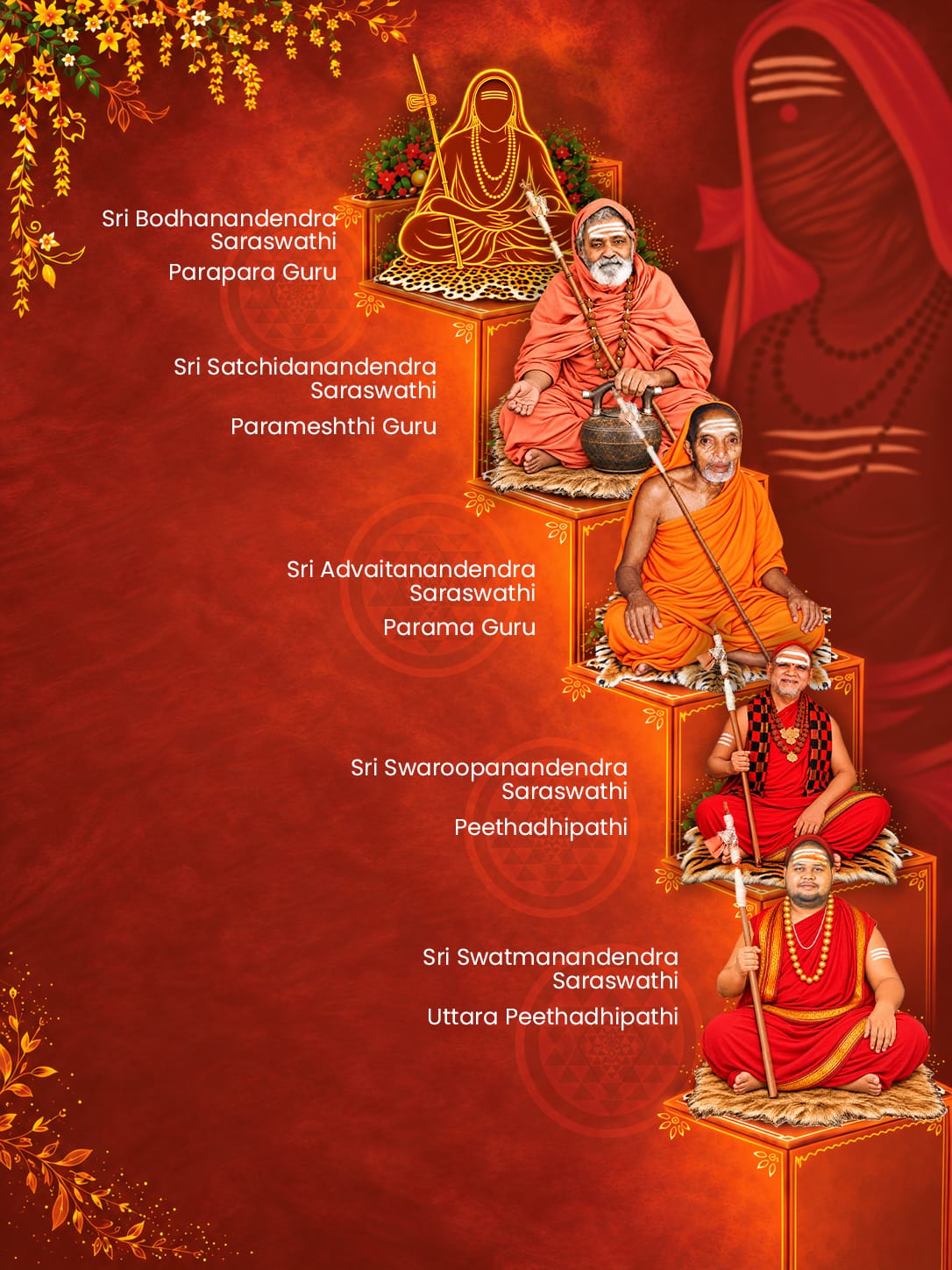
- Parapara GuruSri Bodhanandendra Saraswathi
- Parameshthi GuruSri Satchidanandendra Saraswathi
- Parama GuruSri Advaitanandendra Saraswathi
- PeethadhipathiSri Swaroopanandendra Saraswathi
- Uttara PeethadhipathiSri Swatmanandendra Saraswathi
Under the instructions and blessings of his Guru, Sri Swaroopanandendra Saraswathi Mahaswamiji brought the lineage’s spiritual teachings and practices to Visakhapatnam. The Peetham’s institutional presence in the region thus reflects the continuation of a spiritual inheritance, not the beginning of its philosophical tradition.
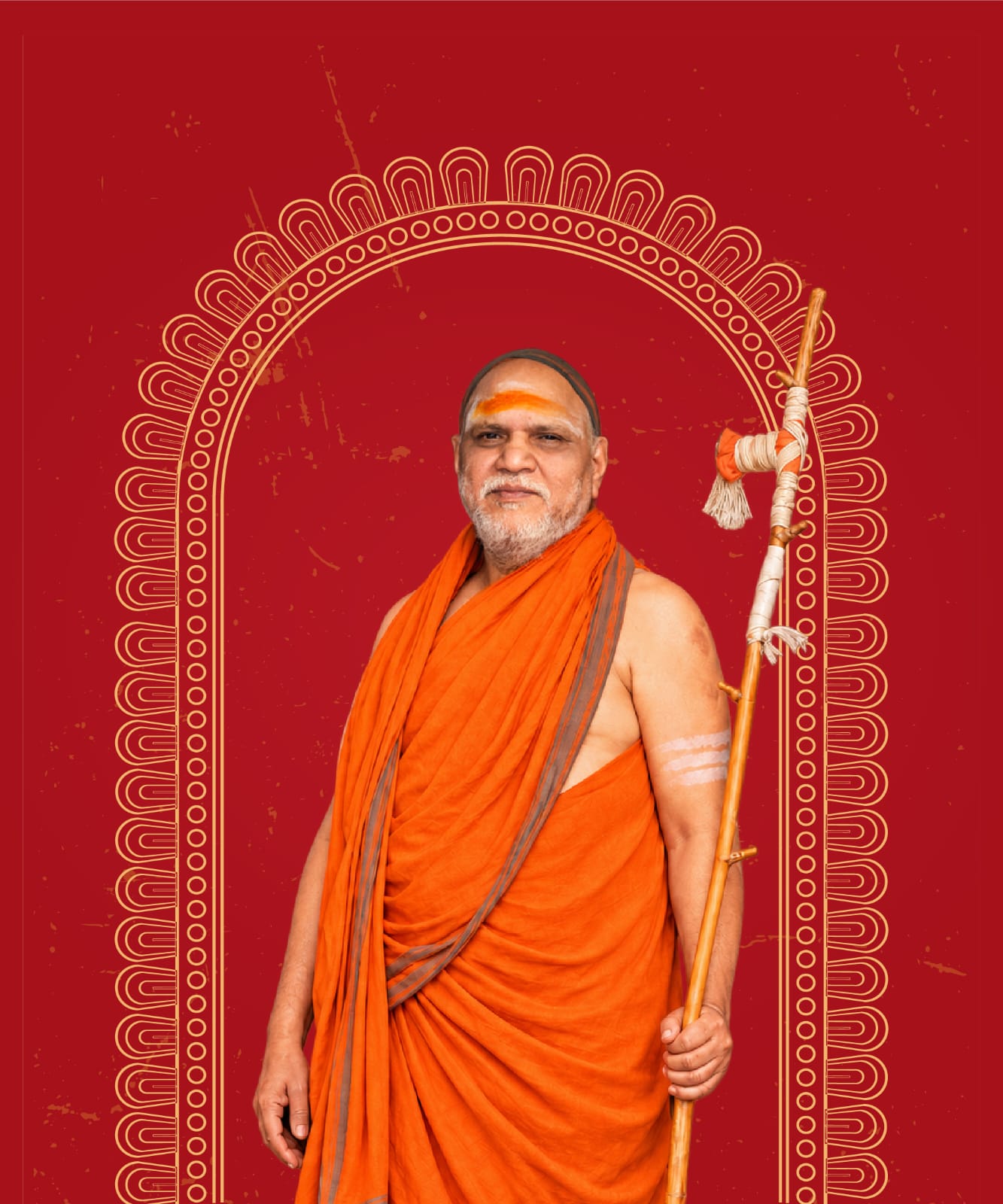
Sri Sri Sri Swaroopanandendra Saraswathi Mahaswamiji
- The HimalayasAusterity, meditation and spiritual inquiry
- HolenarasipuraShankara Bhashya, Karnataka
- MatturSannyasa Diksha on the River Tunga
- VisakhapatnamThe mission begins
His Holiness Sri Swaroopanandendra Saraswathi Mahaswamiji’s spiritual journey began with a profound quest for knowledge and self-realisation. Travelling across India’s sacred pilgrimage centres, including the Himalayas, he embraced austerity, meditation and intense spiritual inquiry in pursuit of the highest truths of Advaita Vedanta in the Himalayan region for many years.
His pursuit led him to Holenarasipura in Karnataka, where he immersed himself in Adi Shankaracharya’s teachings and Shankara Bhashya. Under Sri Advaitanandendra Saraswathi Mahaswamiji, he received Sannyasa Diksha on the banks of the River Tunga at Mattur and was given the monastic name Sri Swaroopanandendra Saraswathi.
Following the instructions of his revered Guru, he returned to Visakhapatnam and began his mission of propagating Advaita Vedanta, Sri Raja Shyamala Devi Upasana and Sanatana Dharma, carrying forward the sacred teachings and traditions of his Guru Parampara.
Under his spiritual leadership, the Peetham has grown as a centre of Vedic and Sanskrit education, scriptural scholarship, Dharma Prachara and spiritual service. Through translations of Sanskrit scriptures into Telugu and writings on Sri Vidya Sadhana, he has worked to make traditional wisdom accessible to devotees and spiritual seekers.
His teachings emphasise Nishkama Bhakti, the pursuit of true knowledge and the realisation that lasting happiness lies not in the material world, but within oneself.

Sri Sri Sri Swatmanandendra Saraswathi Swamiji
- Around age sevenRecognised as an Apara Shankara
- Formative yearsVedas, Sanskrit, rituals and Vedanta
- Age 26Sannyasa from his Guru
- Uttara PeethadhipathiCarrying forward the Guru Parampara
His Holiness Sri Swatmanandendra Saraswathi Swamiji began his spiritual journey around the age of seven, when Sri Swaroopanandendra Saraswathi Mahaswamiji recognised in him the exceptional spiritual qualities of an Apara Shankara.
Under Mahaswamiji’s guidance, he embarked upon a life dedicated to Vedic learning, spiritual discipline and the service of Goddess Sri Sarada. Trained by his Guru and distinguished Vedic scholars, he pursued rigorous studies in the Vedas, Sanskrit, traditional rituals, Vedanta and classical Indian philosophy, devoting his formative years to sacred knowledge.
At the age of 26, he received Sannyasa from his Guru, Sri Swaroopanandendra Saraswathi Mahaswamiji, and was given the monastic name Sri Swatmanandendra Saraswathi. Appointed Uttara Peethadhipathi of Visakha Sri Sarada Peetham, he was entrusted with carrying forward its Guru Parampara and sacred traditions.
Affectionately known as “Bala Swamiji”, His Holiness is revered for his Vedic scholarship, spiritual discipline and steadfast commitment to preserving and propagating Sanatana Dharma.
Seva
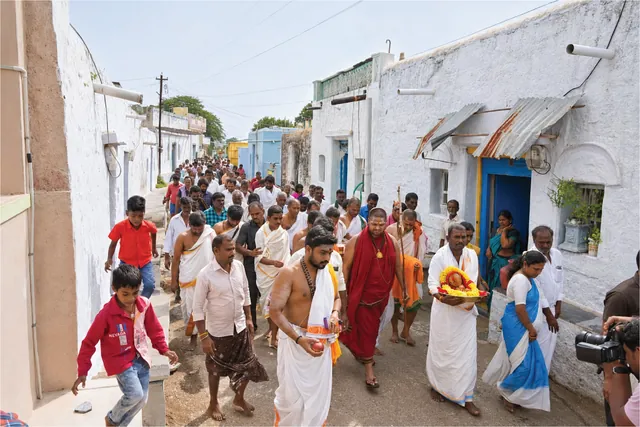
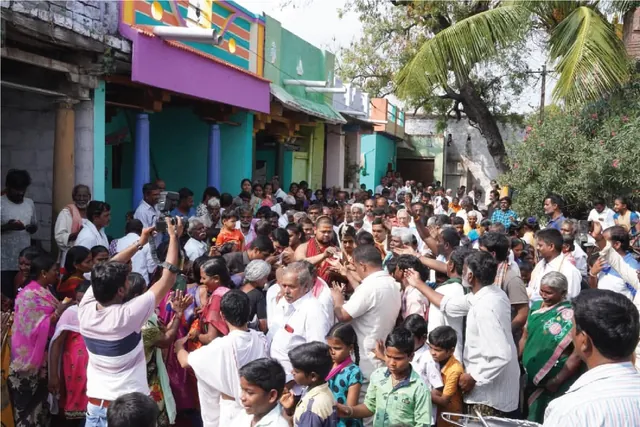
Through years of service and Ghar Wapsi efforts, the Peetham has helped thousands of families return to Sanatana Dharma.
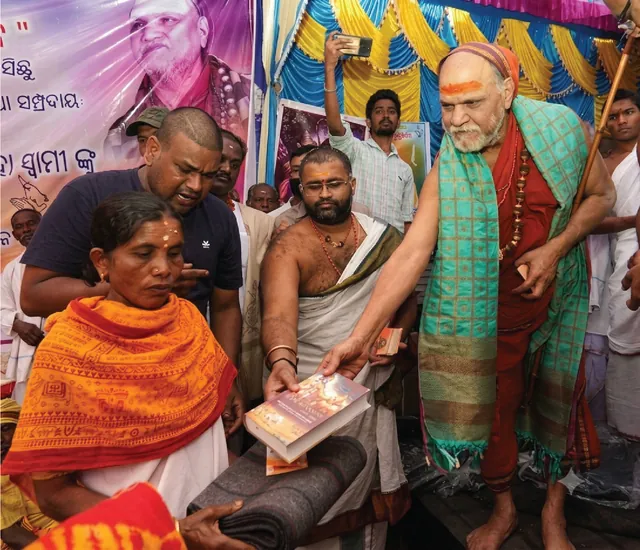
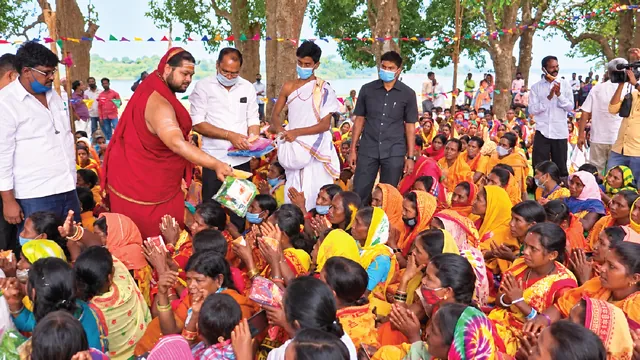
Visakha Sri Sarada Peetham has reached underprivileged Hindu and tribal communities by building temples, training priests from their own communities, providing winter rugs and clothing, and offering special nutrition to pregnant women.
Since 2006, it has arranged Tirumala Darshan for around 1,500 Dalit devotees in 25 buses or by train, once every two years.
The Peetham has also distributed over 400 cows to provide milk and nutrition to tribal families, installed RO drinking water units, provided digital boards for schools and built toilets for women and girls.